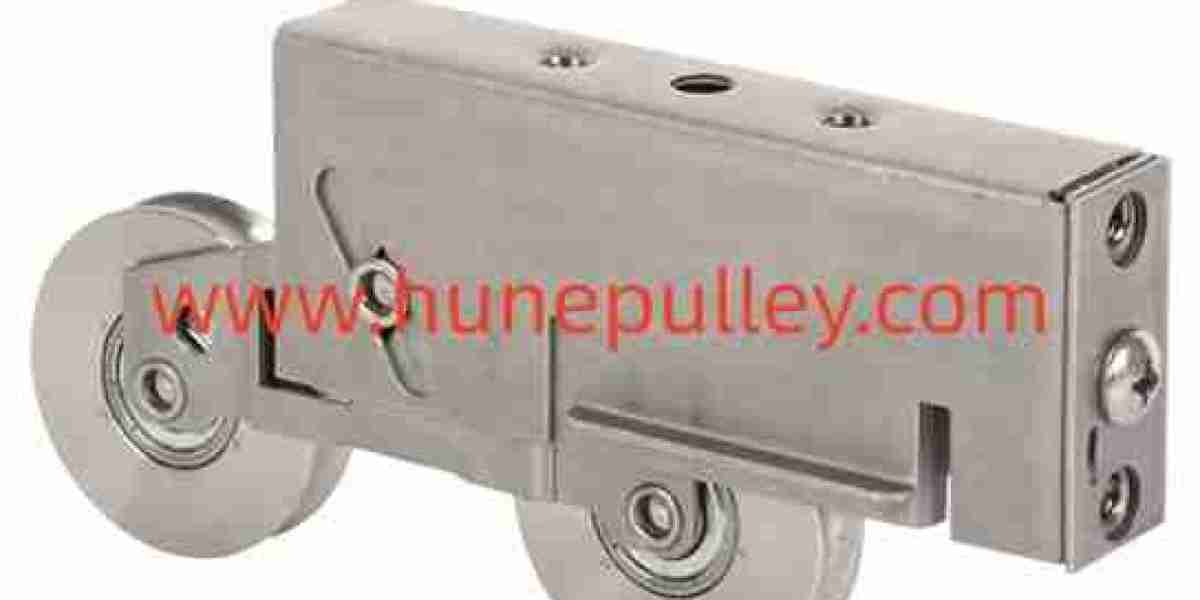

In mechanical systems where components need to travel along a defined path, roller geometry plays an important role in maintaining movement and alignment. A U Groove Roller developed by Hunepulley offers a practical component solution for equipment designers, furniture manufacturers, and industrial buyers seeking guided rolling functionality. Its recessed profile allows the roller to work with compatible tracks, making it suitable for mechanisms that require controlled movement and an organized installation structure.
The defining characteristic of this roller is its U-shaped groove. Unlike a flat rolling surface, the recessed profile provides a channel that can accommodate a matching rail or guide structure. This arrangement helps keep the roller aligned with its intended track during operation. The compatibility between groove dimensions and track geometry is therefore an important factor when selecting a suitable component.
Different mechanical applications have different requirements. Sliding doors, storage systems, movable panels, and selected industrial assemblies may all use grooved rollers as part of their guiding mechanisms. In these situations, the roller contributes to the movement of connected components while helping maintain their position along the track. Understanding the working environment is essential when choosing an appropriate design.
Material selection also influences product characteristics. Rollers may be manufactured using metal, nylon, plastic, or other suitable materials, depending on the intended application. Metal constructions may be considered where structural support is required, while engineered plastics can offer different surface and weight characteristics. The choice should reflect operating conditions, contact materials, environmental exposure, and maintenance expectations.
Bearing configuration is another important consideration. A bearing supports rotational movement and needs to correspond with the intended installation and operating requirements. Buyers should review bearing dimensions, mounting arrangements, and compatibility with the roller body. Proper coordination between these elements helps ensure that the finished component integrates appropriately into the larger mechanism.
Dimensional accuracy deserves particular attention during product development. Groove width, groove depth, outer diameter, overall roller width, and shaft dimensions can all affect compatibility. Even small differences may influence how the roller interacts with its track. Reviewing technical drawings and confirming measurements before ordering can help manufacturers avoid unnecessary adjustments during assembly.
For equipment manufacturers and distributors, product customization may also be relevant. Different projects can require specific materials, mounting structures, surface treatments, or dimensional arrangements. Clear communication about drawings, application environments, and functional expectations helps suppliers understand the requirements and identify appropriate production options.
Quality management is an important part of roller manufacturing. Material inspection, machining accuracy, bearing installation, and finished-product checks all contribute to production consistency. Attention to these processes helps ensure that components correspond with their specified design requirements. It also gives purchasing teams useful information when evaluating suppliers and planning future orders.
Maintenance considerations should be included in equipment planning. Track cleanliness, correct installation, and suitable alignment can influence the operating condition of grooved rollers. Periodic inspection may help identify wear, contamination, or changes in rotational movement. Following the maintenance recommendations for the complete mechanism can support reliable operation throughout its intended service period.
For businesses sourcing mechanical components, selecting a roller is not simply a matter of finding a matching shape. It requires understanding the relationship between track geometry, material properties, bearing construction, and installation conditions. A carefully selected component can help simplify equipment integration and support the intended movement of the finished product.
Every smooth-guiding mechanism begins with the right connection between its components. Give your next design project a fresh starting point by visiting https://www.hunepulley.com/product/ . Browse the available roller and pulley solutions, consider the possibilities for your application, and turn your technical requirements into a clearer sourcing direction.